


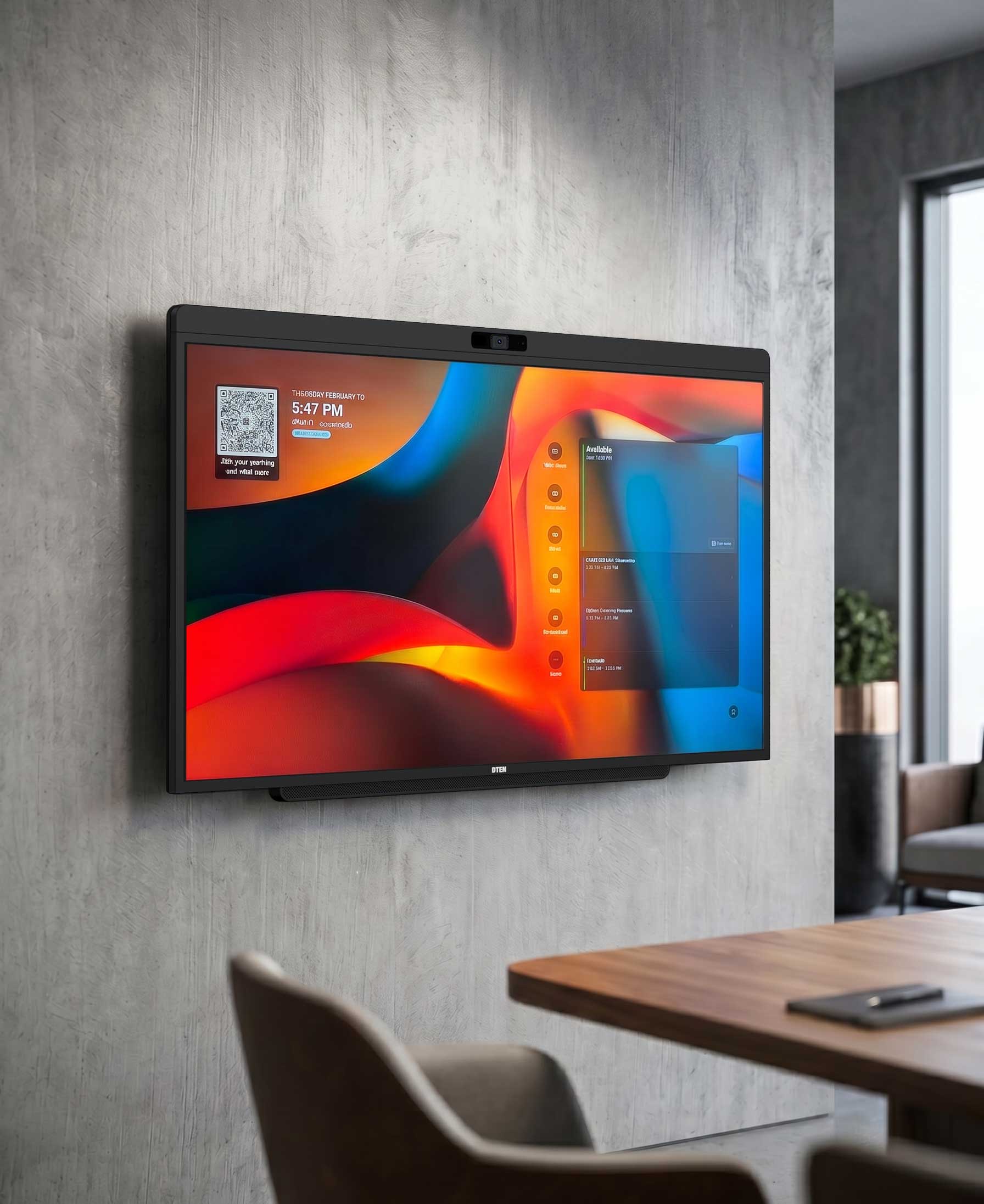
Replace the
Surface Hub.
Upgrade the room.
Production of Surface Hub has ended with no successor. Every Surface Hub you own is now orphaned hardware on a platform Microsoft continues to invest in. This page sets out what remains unchanged — and what the room gains.

The platform continues.
The hardware does not.
Microsoft has ended Surface Hub production with no successor in development. Microsoft Teams Rooms on Windows, Microsoft Whiteboard, and Copilot all continue to receive investment. The board on the wall is the only part of the room without a forward path.
“Orphaned hardware on a platform with a future.”
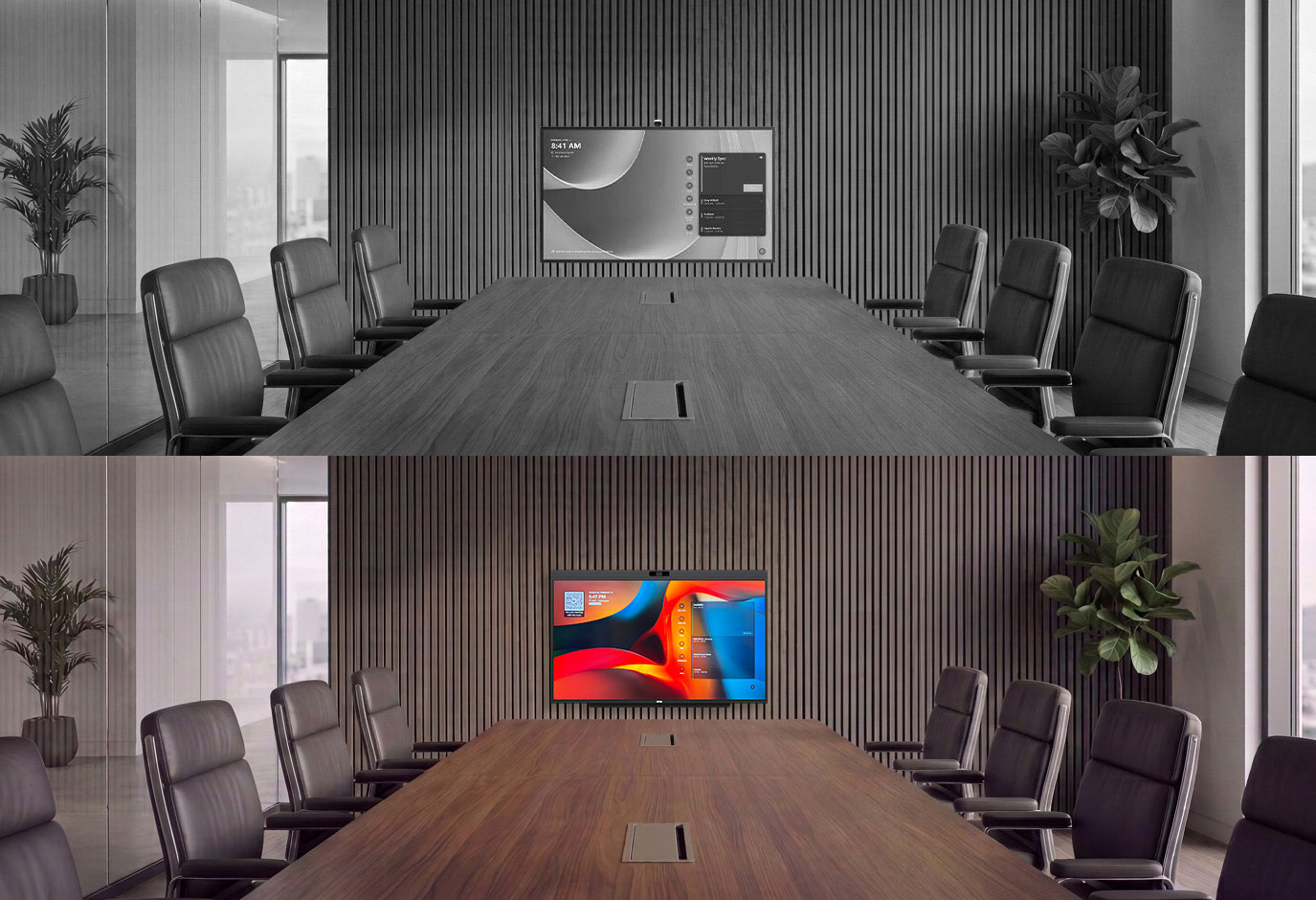
The complete picture.
What stays the same, and what genuinely improves when you make the switch.
The same Microsoft platform.
Both devices run Microsoft Teams Rooms on Windows, with the same meeting experience, the same Microsoft release cadence, and the same Copilot and Facilitator behaviour in every meeting.
The same management tooling.
Both devices are managed through Intune. As a native Windows endpoint, the D7X AI Board additionally supports Autopilot and Group Policy, with DTEN Orbit providing device health and remote support.
The same whiteboard and inking.
Native Microsoft Whiteboard and stylus input on both devices. Existing Whiteboard content, calendar integration, and Microsoft 365 sign-in carry across unchanged.
3D understanding, not 2D framing.
Both boards feed the same Microsoft services. The difference is what reaches them. Surface Hub sends a single wide 2D frame from one camera. The D7X AI Board maps the room in 3D with two depth sensors, identifies living people apart from photos and reflections, and sets the meeting boundary with zero setup.
Per-face exposure instead of one room exposure.
Because the AI resolves each face in 3D space, brightness and exposure are corrected per person rather than for the room as a whole. Backlit windows no longer render the people in front of them as silhouettes.
Signal Copilot and Facilitator can actually use.
A 15-element array with on-board voice separation and 3D noise suppression conditions the room signal before it leaves the device. Microsoft's speaker recognition and Facilitator do the same job on both boards — they simply have more to work with on this one.
Larger rooms without a second system to manage.
Extending Surface Hub coverage to a larger space requires separately certified peripherals, each managed independently. The D7X AI Board extends with Vue Pro cameras, Relay speakers, and Mate Gen 2 — all processed on-board and managed as one system.
Every room. Every size. One system.
The D7X AI Board is designed to disappear into the room. One cable. One device. No peripherals to certify, no additional surfaces to manage.
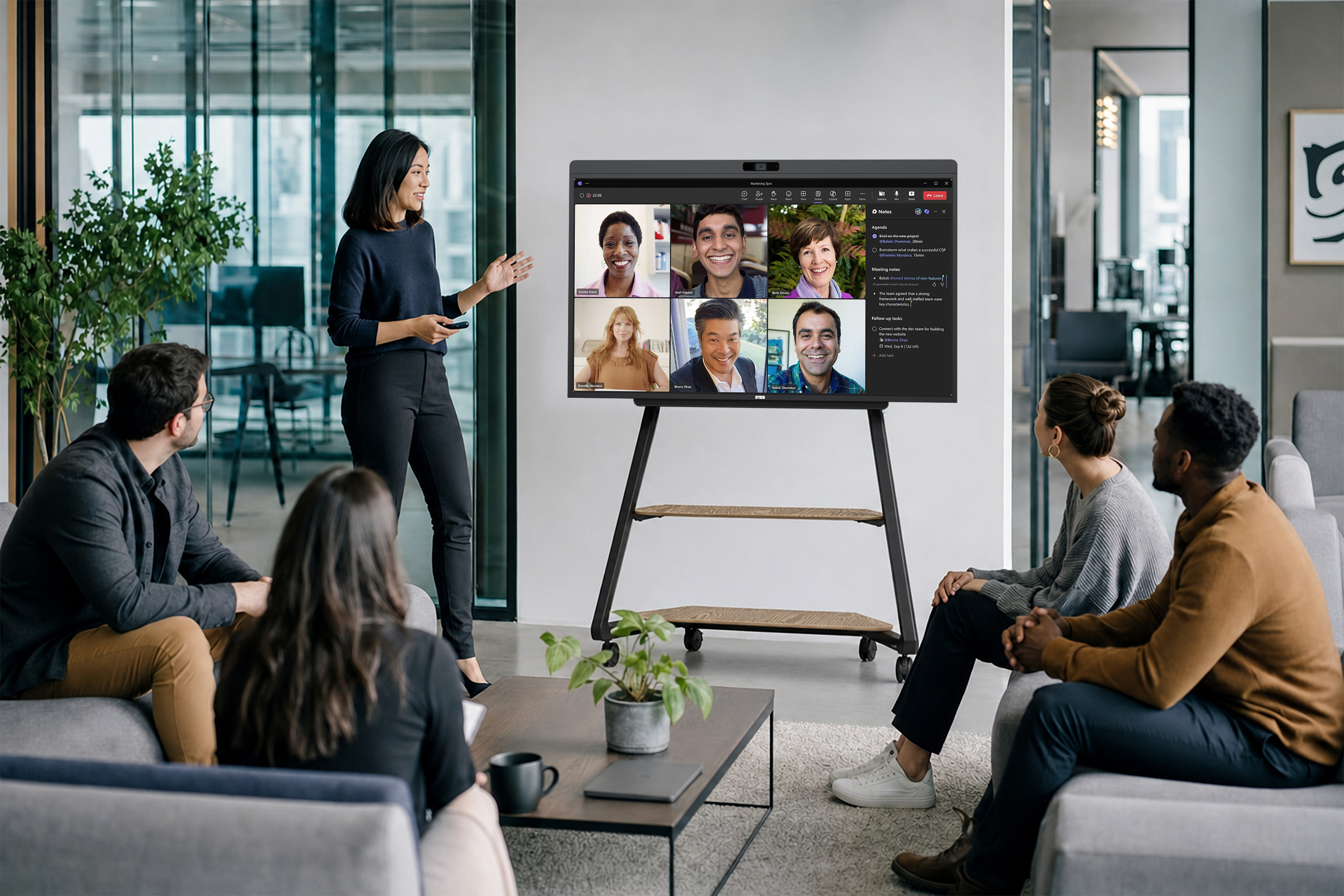
See it in your own rooms before committing to a rollout.
DTEN will review your current Surface Hub rooms, map replacements by room size, and arrange an evaluation in your own environment.
Surface Hub and Microsoft Teams are trademarks of Microsoft Corporation. This page is prepared by DTEN Inc. and is not endorsed by Microsoft.